

Moving House During Pregnancy: A Practical Plan
You can move house while pregnant, and the safest way is to hand every heavy, awkward and repetitive task to someone else, so your job on the day is to direct, rest and keep your essentials close. Packing, lifting, carrying and loading are where the physical risk sits. A professional removals team takes all of them off you. That is how we approach pregnant customers at Taylormade Removals in Chester, Wrexham and across North Wales: you decide where things go, and we do the lifting.
This guide covers what the official guidance says about lifting, how to plan the weeks around a move, how to keep stress manageable, and when to call your midwife.
TL;DR
- Avoid lifting heavy things from the floor, lifting overhead, and standing for hours. CDC/NIOSH guidance names all three for pregnant workers.
- UK law sets no fixed weight limit, so the sensible rule is simple: if it feels heavy or awkward, you don’t carry it.
- Book packing and removals early, and keep your maternity notes, medication and hospital bag with you rather than on the van.
- Stop and contact your midwife or maternity unit if you have pain, bleeding or persistent cramping.
- Tell your midwife or GP about the move and ask what is sensible for your stage of pregnancy.
Table of Contents
- Why moving is different when you are pregnant
- What the guidance says about lifting and carrying
- When is the best time to move?
- A step-by-step plan for the weeks around the move
- Moving day: how to protect your energy
- Managing stress before and after the move
- When to stop and call your midwife
- Perspective: why we pack and carry so you do not have to
- Ready to book your move
- FAQ
- Sources
Why moving is different when you are pregnant
A move combines two things pregnancy makes harder: physical exertion and mental load. Moving can involve heavy lifting and long days on your feet, and pregnancy changes how your body copes with both. It also brings worry about dates, chains, keys and boxes. Bounty’s guide to moving home when pregnant points out that this anxiety can affect sleep, concentration and eating, at a time when low mood and poor sleep are already common.
The good news is that almost all of the risk is in the tasks, not the move itself. Take the tasks away and what remains is organisation, which you can do sitting down.
What the guidance says about lifting and carrying
The clearest official advice comes from CDC/NIOSH, the US body for workplace health. It says pregnant workers may want to reduce or avoid:
- lifting heavy objects from the floor
- lifting heavy objects while bending or reaching
- lifting overhead or reaching up
- standing for three hours or more
It also says high physical demands, such as prolonged standing or heavy lifting, might raise the chance of miscarriage or preterm birth, and that you should talk to your doctor about which demands are safe for you. What is safe depends on your health, fitness and stage of pregnancy.
A clinical evidence summary on lifting in pregnancy recommends no lifting or lowering from the floor with the hands below mid-shin, and no overhead lifting. As pregnancy progresses, picking things up from the floor gets harder and balance becomes less steady, which is why those two movements are singled out.
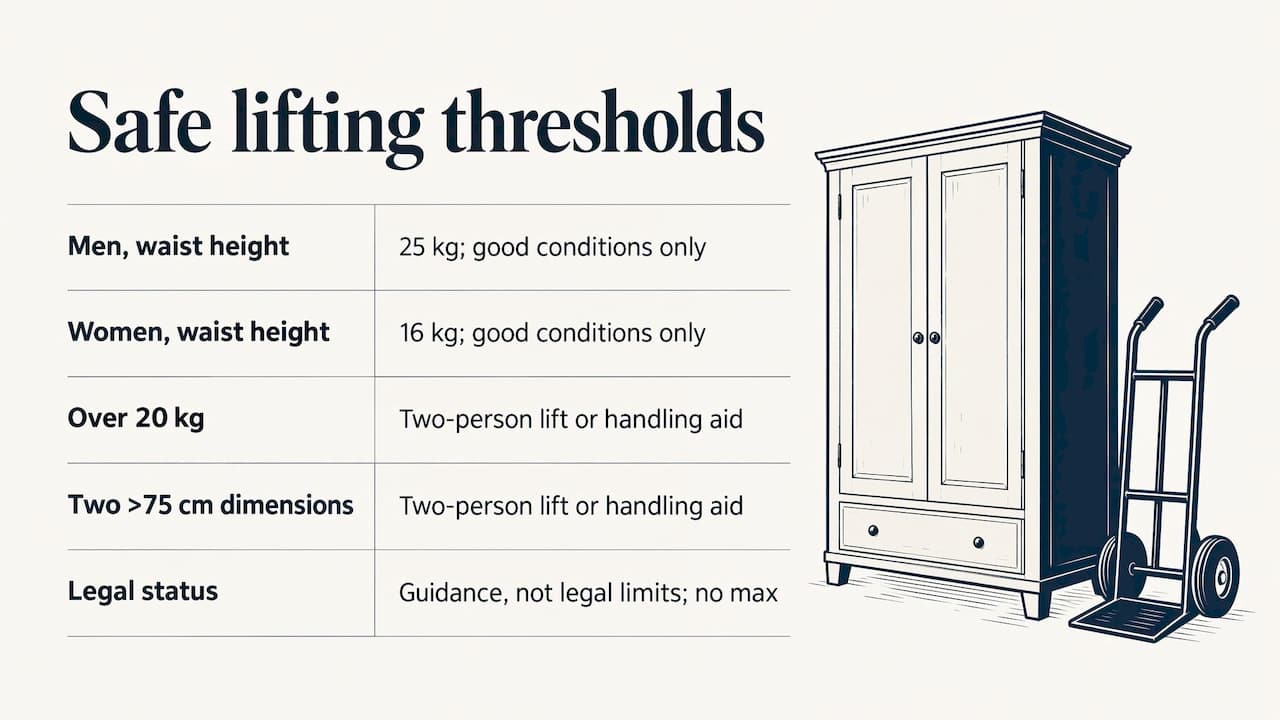
In Great Britain, the Health and Safety Executive says the law sets no specific weight limits, and that its manual handling guideline figures are not safe limits. The same page lists new or expectant mothers among the people for whom a more detailed assessment is needed. So there is no magic number of kilos. Your own judgement, your midwife’s advice and a sensible plan do the work.
BabyCentre takes a more relaxed view of everyday lifting: it is generally fine if it feels comfortable and your technique is good, and you should ask for help when something is heavy or awkward. A house move is the opposite of everyday lifting. Wardrobes, boxes of books, washing machines and stairs are exactly the heavy, awkward loads that advice has in mind.
The moving tasks to hand over
| Task | Why it is a problem | What to do |
|---|---|---|
| Emptying low cupboards and floor-level drawers | Repeated lifting from below mid-shin | Have someone else pack them |
| Loading boxes onto the van | Heavy, repeated, bending and twisting | Leave it to the removals team |
| Carrying furniture and appliances | Awkward weight, stairs, balance | Book a team for heavy furniture and heavy appliances |
| Reaching top shelves and loft spaces | Overhead lifting | Ask someone to clear them |
| Cleaning and unpacking marathons | Long standing | Short sessions, sit between rooms |
If you do lift something light
For small, light items, Johns Hopkins Medicine’s guidance on posture during pregnancy advises bending at the hips and knees rather than the waist, keeping your back as straight as possible and holding the object close to your body as you rise. Splitting a heavier carry into two smaller loads, one on each side, also helps. Treat this as technique for a lightweight bag or a lamp, never as permission to take on a box of books.
When is the best time to move?
There is no perfect trimester, and most people move when the sale, the tenancy or the job dictates. One observational study from the University of Washington found that a house move in the first three months of pregnancy was associated with a higher risk of low birthweight and premature birth than not moving in that period. An association is not proof that the move caused it. Stress, disruption and physical strain all travel together with moving, which is a good reason to remove as much of each as you can.
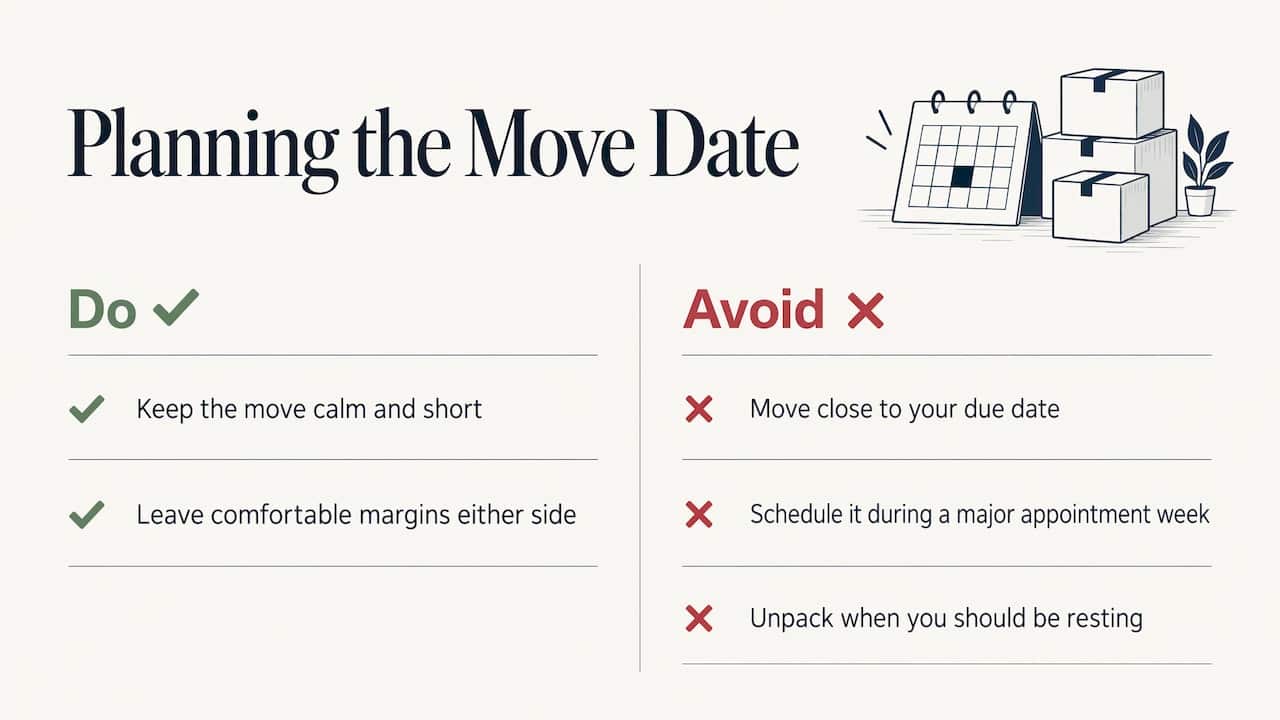
In practice, the aim is to keep the move itself calm and short, and to avoid the last weeks before your due date where you can. If you have a choice, leave comfortable margins either side of the move: do not schedule it in the same week as a major appointment, and do not plan to be unpacking when you should be resting.
If the date is not yours to choose, our guide to organising a last minute move sets out how to keep a short-notice move controlled.
A step-by-step plan for the weeks around the move
1. Talk to your midwife or GP
Tell them you are planning to move and ask what is sensible for your stage of pregnancy. CDC/NIOSH advises exactly this conversation, because safe levels of activity vary from person to person. If you are moving across a boundary, ask about transferring your maternity care to the new area’s team, and about the new antenatal appointments you will need to book.
2. Book the removals team early
Bounty recommends finding a removals firm and having things packed by professionals, and notes it can be more affordable than people expect. Ask for a quote as soon as you have a date. At Taylormade Removals we cover home removals, packing, piano and large-item removals across Chester, Wrexham, Cheshire and North Wales, and we are fully insured. You can see our home removals service or, if you are in Wrexham, our Wrexham removals page. Tell us you are pregnant when you book so the plan is built around you doing none of the lifting.
3. Have the packing done for you
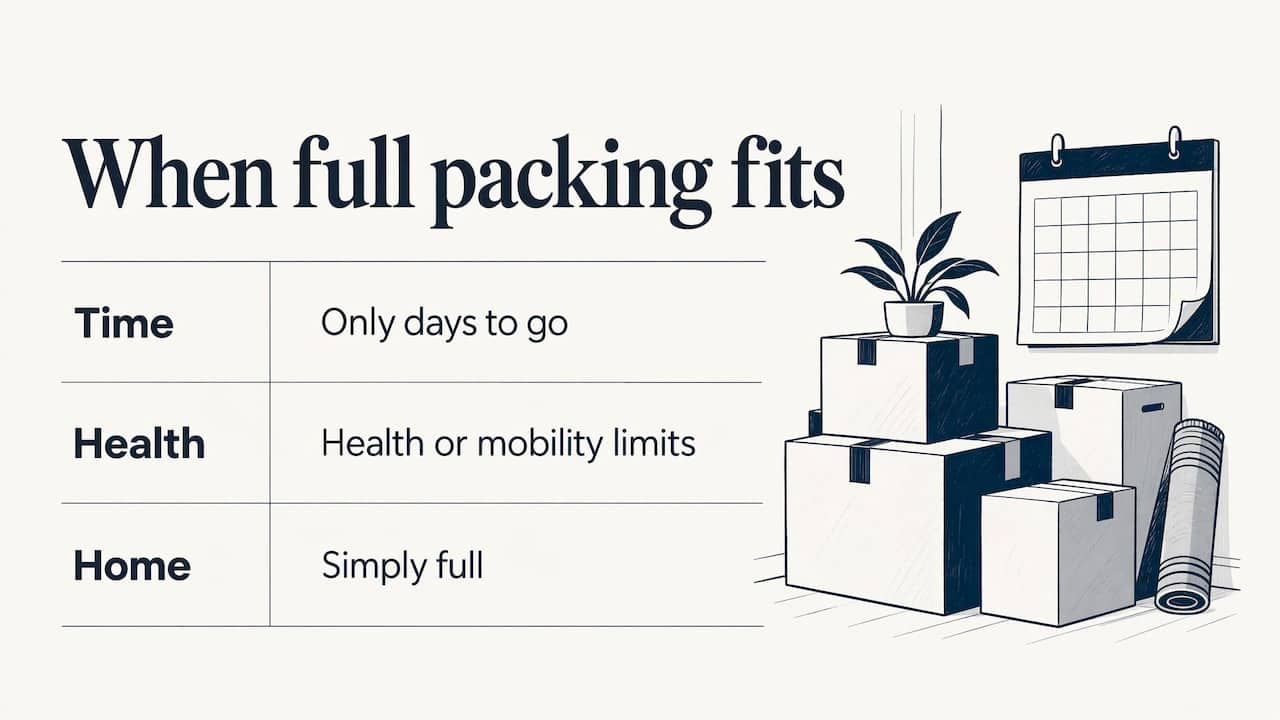
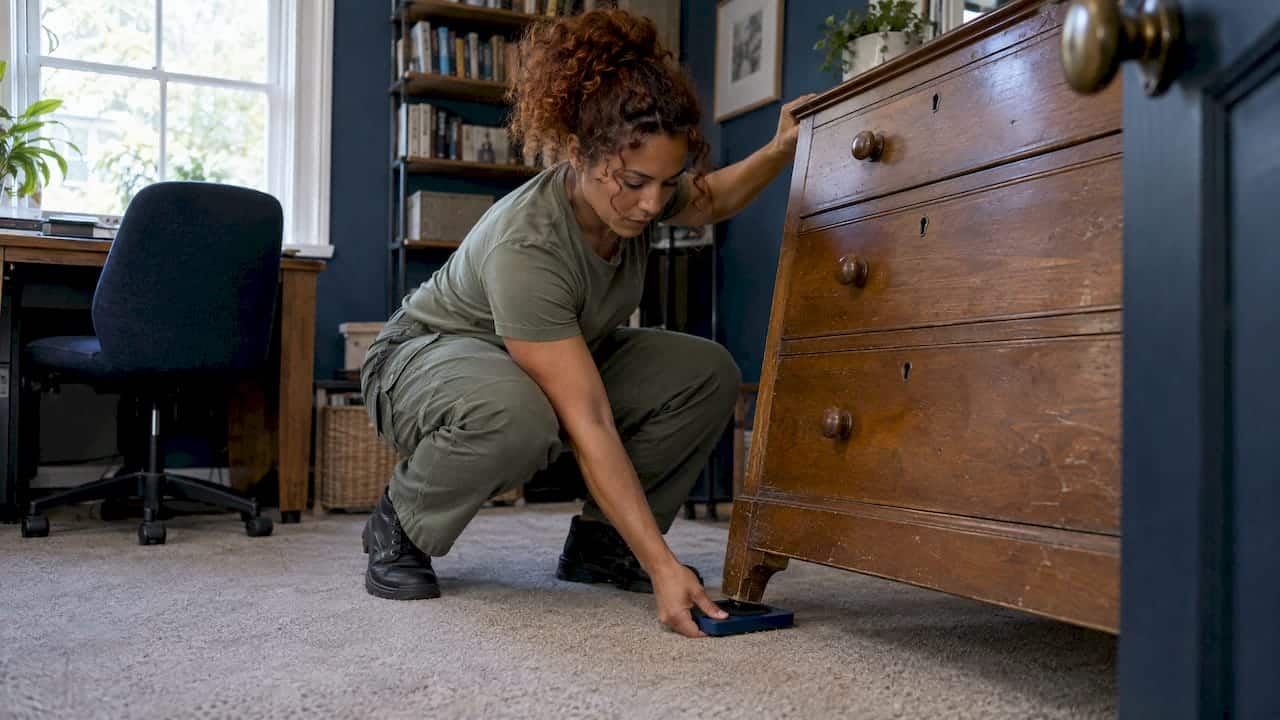
Packing is the longest and most physical part of the job: bending to floor-level cupboards, reaching into wardrobes, lifting full boxes. Our packing service means those hours are not spent on your feet. If you want to pack some things yourself, keep to light, waist-height items, such as clothes and bedding, and stop when you tire.
4. Sort out the awkward items
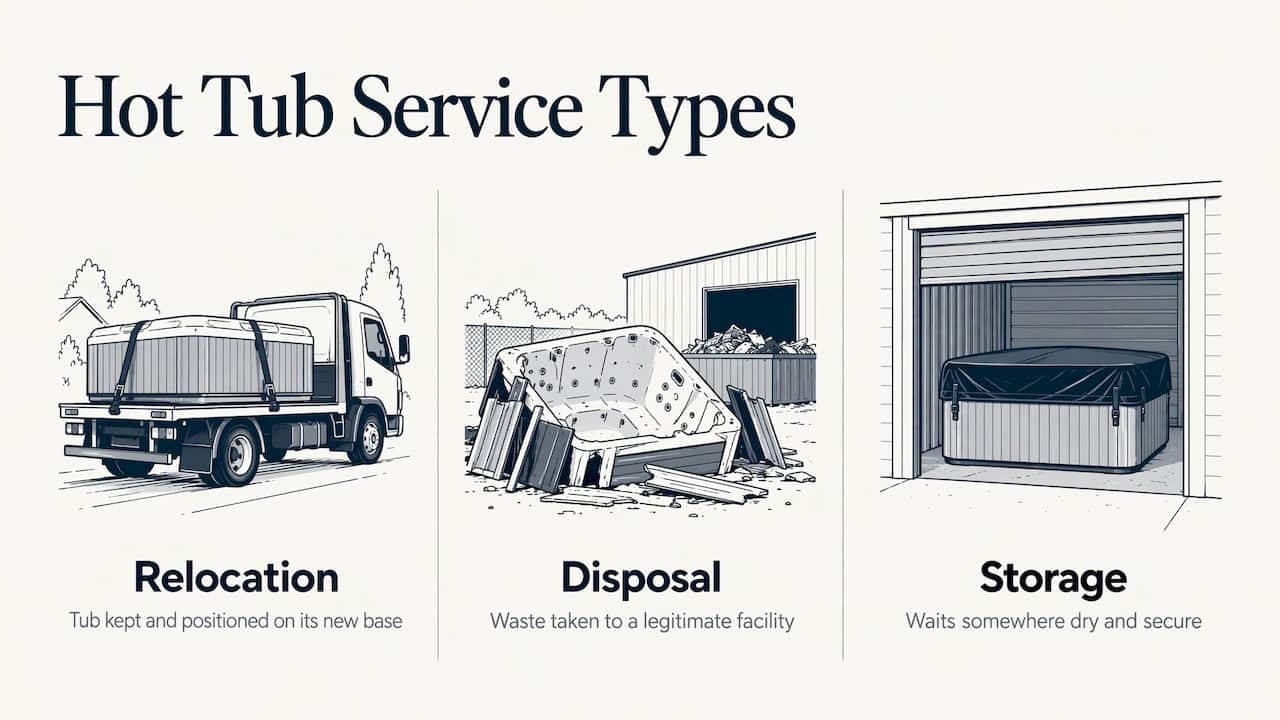
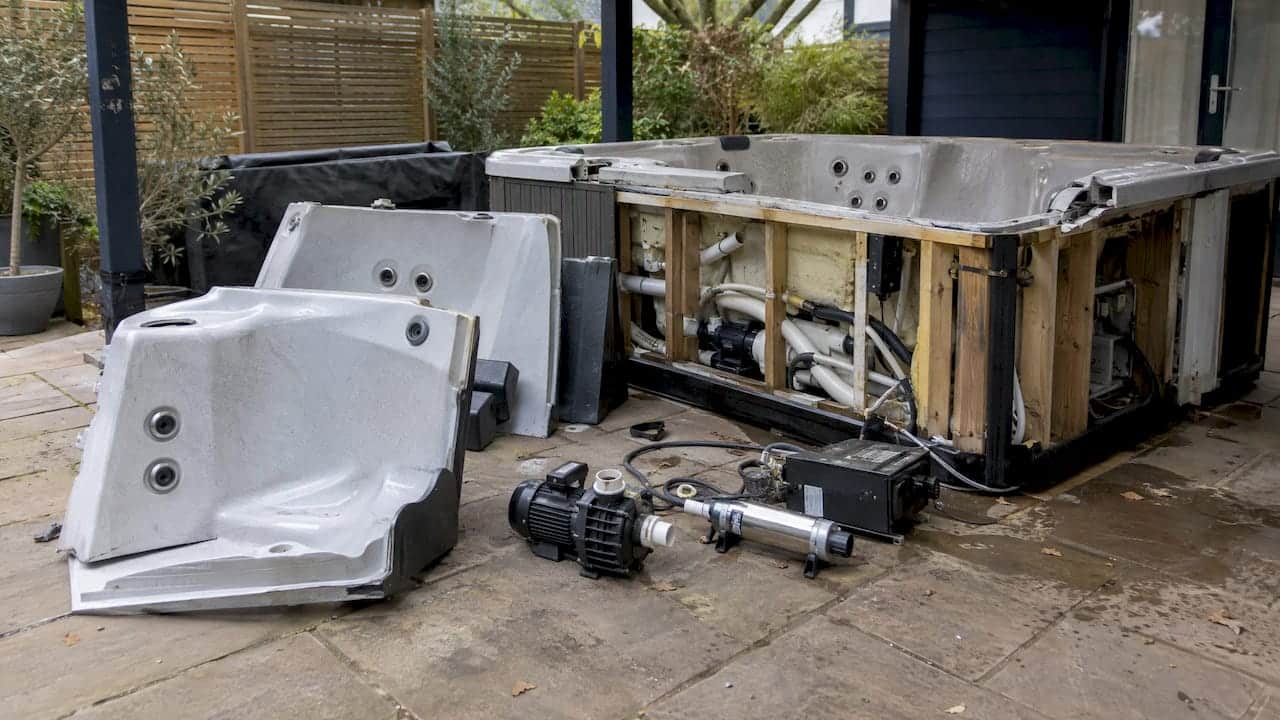
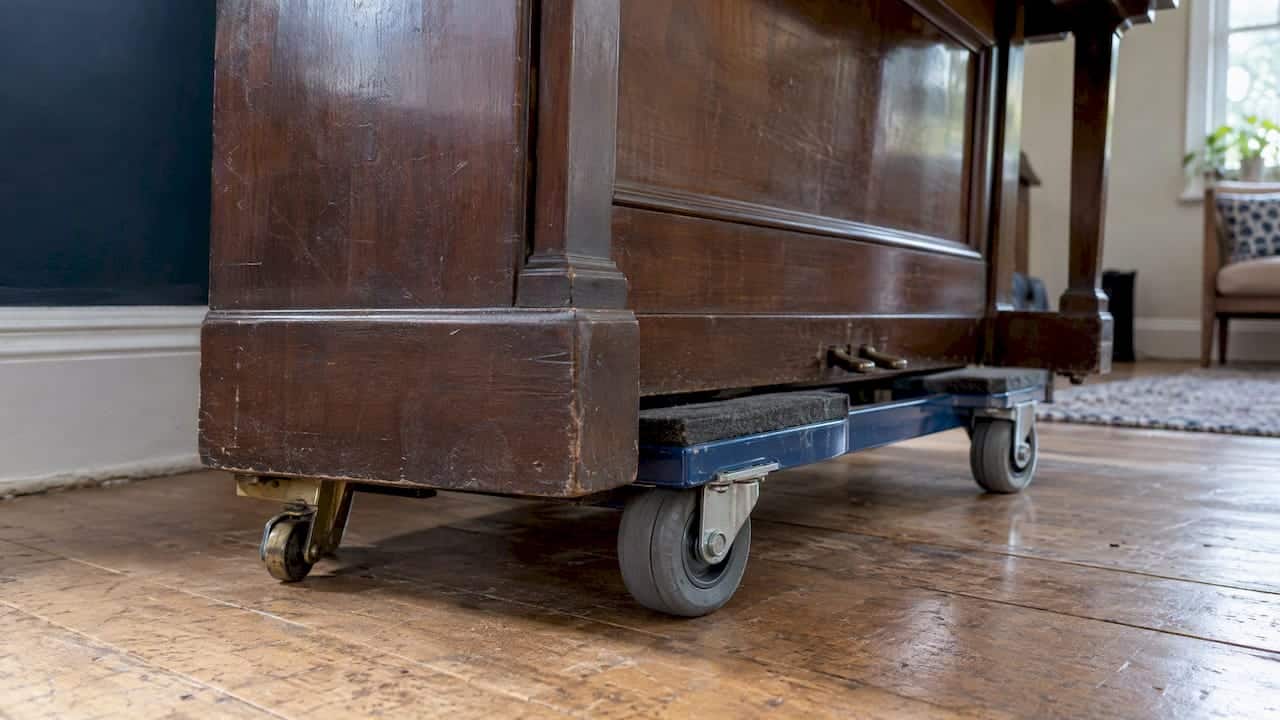
Pianos, hot tubs, large wardrobes and heavy appliances are the items most likely to tempt someone to “just help”. Plan these as team jobs from the start. We handle piano removals and large-item removals as part of our home removals service.
5. Use storage to break the move into stages
If your new home is not ready, or you want a lighter move-in day, putting furniture into storage avoids a second move later. We offer flexible storage solutions for homeowners and tenants going through transitions, so you can move in with just what you need for the first weeks and bring the rest over when you feel ready.
6. Pack a bag that travels with you
Keep your maternity notes, medication, snacks, water, phone charger and a change of clothes with you in the car, not on the van. Depending on your stage, your hospital bag belongs there too. Bounty also advises keeping essentials for baby and hospital to hand on moving day.
7. Plan the new home’s first night
Ask for your bed to be built and made up first, and the kettle, toiletries and a comfortable chair to be unboxed before anything else. A rested first night is more valuable than a tidy kitchen.

Moving day: how to protect your energy
Your role on the day is supervisor. Stay in one calm spot with a chair, a drink and the paperwork, and let the team come to you with questions. CDC/NIOSH’s advice to reduce prolonged standing applies directly: a removals day easily runs longer than three hours.
A few habits make a difference:
- Eat regularly and keep water to hand.
- Sit while you give instructions, and walk through each room once at the start rather than repeatedly.
- Ask a friend or relative to look after children or pets, so you are not chasing them while the doors are open.
- Leave the cleaning of the old home to others, or book it separately.
- Keep your phone charged and your midwife’s or maternity unit’s number saved.
If you are a tenant, remember that the same applies to emptying the old property. For a tenancy ending, our house clearance service includes end of tenancy clearances, so unwanted furniture does not have to be carried out by you.
Managing stress before and after the move
Stress about a move is normal. NHS Wales’ Healthier Together page on anxiety in the perinatal period explains that anxiety can show up as physical sensations and emotional reactions, can make it hard to sleep, concentrate or eat, and usually eases once the situation resolves. It gives moving house as one example of a trigger.
Three things reduce the load in practice:
- Fewer decisions on the day. Decide where the large furniture goes before the move and mark rooms on the boxes.
- One point of contact. A single team handling packing, loading, transport and unloading means one conversation instead of several.
- Telling someone. Bounty’s advice is not to take on too much and to talk to someone if you feel overwhelmed. If low mood or worry persists or grows, speak to your midwife or GP rather than waiting for the move to be over.
When to stop and call your midwife
Put this above everything else in your plan. BabyCentre advises stopping any lifting and contacting your midwife or maternity unit if you develop pain, feel unwell, or notice bleeding or persistent cramping. Do this whether you are packing at home or standing in the new hallway. If you notice a change in your baby’s movements, contact your maternity unit the same day. Do not wait for the move to finish.
Perspective: why we pack and carry so you do not have to
Customers who are expecting often apologise when they call us, as though asking for help were an imposition. It is exactly what a removals team is for.
Our approach is built on careful handling of belongings, from the first box to the last item unloaded. For a pregnant customer, that care extends to the plan: we do the packing, the loading, the carrying and the unloading, and you stay seated, in charge and rested. We are a local team in Chester and Wrexham with more than twenty years of experience, and a calm move is what we aim for every time.
The official advice points one way. Avoid heavy lifting, avoid long periods on your feet and ask for help. A professional, insured team is the most dependable way to follow it, because the heavy work is simply not left to you.
the author
Ready to book your move
If you are moving in Chester, Wrexham or the surrounding area, our team can quote for the whole move: packing, removals, large items and storage if you need it. Tell us at the start that you are pregnant and what your due date is, so we can plan the day so that you are not lifting anything.

You can request a quote for your home removal or find us in Chester.
FAQ
Is it safe to move house when pregnant?
For most people, yes, provided the heavy work is done by others. Official guidance says to avoid heavy lifting, lifting from the floor, lifting overhead and long periods of standing. Talk to your midwife or GP about what is safe at your stage of pregnancy.
How much can I lift when pregnant?
There is no single legal or medical figure. The HSE says the law sets no specific weight limits and that new or expectant mothers may need a more detailed assessment. If something feels heavy or awkward, do not lift it, and ask your midwife for advice tailored to you.
Is there a best trimester to move house?
No trimester is risk-free to move in, and many people have no choice about timing. One observational study linked a move in the first three months with higher risks of premature birth and low birthweight, though that shows an association rather than a cause. Whatever your stage, keep the physical load and the stress as low as you can.
Can I pack my own boxes?
Light items at waist height, such as clothes and bedding, are reasonable if you feel comfortable and take regular breaks. Leave floor-level cupboards, top shelves and anything heavy to someone else. Our packing service takes the whole job off your hands.
Who should I tell about the move?
Tell your midwife or GP first, so your maternity care can follow you to the new area. Tell your removals team when you book, so the plan is built around you not lifting. Contact your midwife or maternity unit straight away if you have pain, bleeding or persistent cramping.
Sources
- CDC/NIOSH: About Physical Job Demands and Reproductive Health
- Clinical guidelines for occupational lifting in pregnancy (PMC)
- HSE: Simple manual handling risk filters
- BabyCentre: Is it safe to lift heavy things during pregnancy?
- Bounty: Moving home when pregnant
- Johns Hopkins Medicine: Posture and body mechanics during pregnancy
- University of Washington: House move during early pregnancy study
- Healthier Together (NHS Wales): Anxiety in the perinatal period