


Hot Tub Removal and Moving Services: How to Plan Yours
A hot tub removal service takes the tub away from your property, either to a new address or to be disposed of. The job is mostly about access, weight and paperwork. Moving it to a new home means draining, disconnecting, lifting and transporting it intact. Disposal means draining it, taking it apart and sending the shell and electrical parts to the right place. Both need a team that is insured, careful with your garden and house, and legally able to carry waste.
This guide explains how each job works, what changes the price, how to dispose of a tub legally in England and what to sort before the crew arrives. It is written for homeowners, tenants, landlords and businesses in Chester, Wrexham, Cheshire and North Wales, but the rules and checks apply across most of the UK.
TL;DR
- Decide first whether the tub is being moved (kept and reinstalled) or removed (scrapped). The crew, equipment and paperwork differ.
- Access decides most of the difficulty: gates, side passages, fences, steps, decking and overhead cables all affect how the tub gets out.
- If you use a waste carrier, check it is on the register of waste carriers and select the “upper tier” option.
- Have a registered electrician disconnect the tub, and use one for reconnection at the new address.
- If the new garden is not ready, or you are renovating or downsizing, the tub can wait in storage until it is.
Table of Contents
- What a hot tub removal service actually does
- Before the crew arrives: preparing the tub
- Access, lifting and protecting your property
- What affects the cost of moving or removing a hot tub
- Disposing of an unwanted hot tub responsibly
- Electrics: the part that is not a removal job
- Storing a hot tub during a move or renovation
- Moving house with a hot tub
- What to check before you book anyone
- Our view: why careful handling matters most
- Talk to us about your move or clear-out
- FAQ
- Sources
What a hot tub removal service actually does
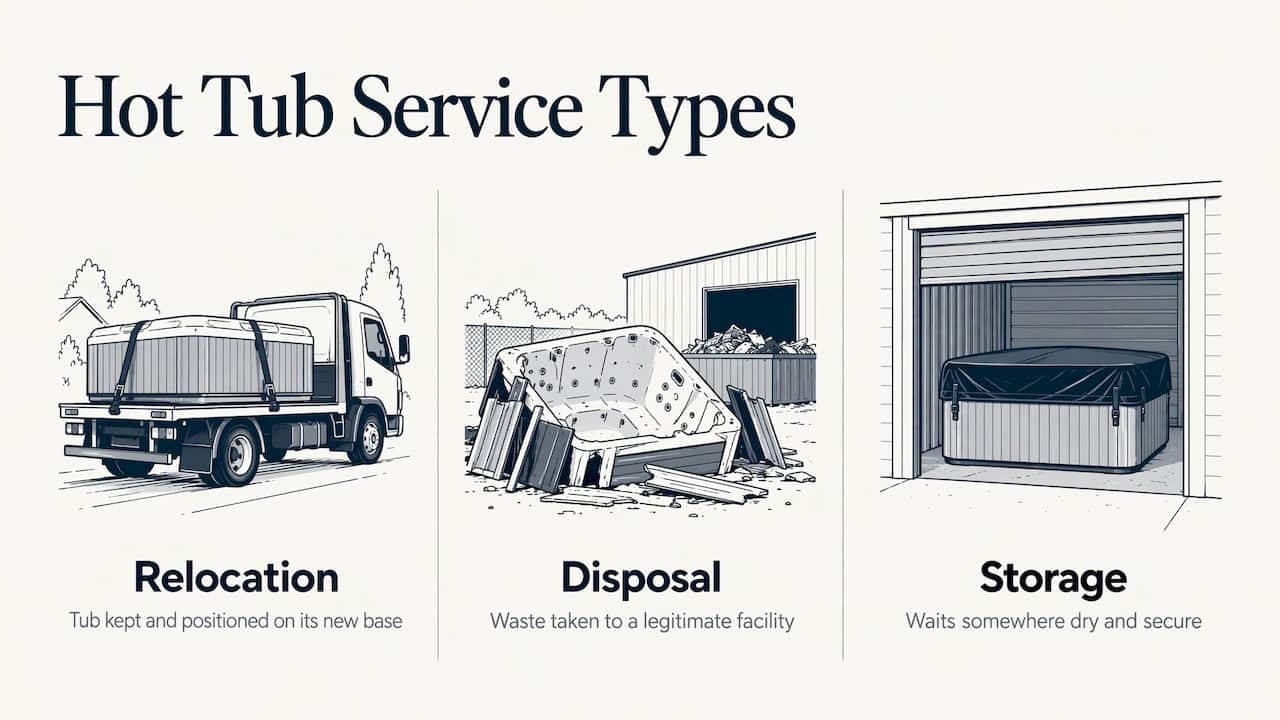
People use “removal”, “moving” and “relocation” for the same thing, but there are really three different jobs.
Relocation. The tub is kept. It is drained, disconnected, lifted out, secured on a vehicle, carried to the new site and positioned on its base. The aim is to deliver it undamaged, so the shell, the cabinet panels, the cover and the plumbing connections all have to survive the trip.
Removal for disposal. The tub is not coming back. The crew empties it, separates the electrical parts, breaks down the shell if needed and takes the waste to a legitimate facility. Speed matters less than doing it lawfully.
Removal and temporary storage. Common during building work, a loft or garden renovation, a house sale where the buyer does not want the tub, or a gap between moving out and moving in. The tub leaves the garden and waits somewhere dry and secure.
It helps to be clear about which one you need when you ask for a quote. It changes how many people turn up, what vehicle they bring and how long the visit takes.
Before the crew arrives: preparing the tub
Good preparation shortens the job and lowers the risk of damage. Work through these steps in order.
- Switch off and isolate the power. Turn the tub off at the isolator and the consumer unit. Leave any permanent electrical disconnection to a registered electrician.
- Drain the water. A full tub is far too heavy to move. If the water has been chemically treated, avoid sending a large volume straight into a surface water drain or a watercourse. Check your water company’s guidance on draining treated water to the foul sewer in sensible quantities.
- Clean and dry the shell. A dry tub is lighter and easier to grip, and a clean one is less likely to stain a vehicle.
- Remove loose items. Take out the cover, steps, filters, loose headrests and any speakers or accessories. Pack small parts so they stay together.
- Measure the tub and the route. Note the length, width and height, and measure every gate, passage and doorway between the tub and the road.
- Clear the route. Move planters, furniture, bins and bikes. Take down any temporary fencing panels that can safely come out.
A tub that looks drained can still hold some water. The Construction Plant-hire Association notes that hot tubs are pressure tested in manufacture and, even after draining, may contain residual trapped water in the internal pipework. That extra weight is one reason a careful crew plans a lift with a margin rather than trusting the brochure figure.
Access, lifting and protecting your property
The tub itself is rarely the problem. Getting it out of the garden is. Before anyone gives you a firm quote, they need to know the answers to these questions.
- How wide is the narrowest point? A side passage or gate narrower than the tub means it must be tilted, carried on its edge or lifted over.
- Is the route level? Steps, slopes and soft lawn all make a heavy load harder to control.
- Is the tub built in or free-standing? A tub sunk into decking or a patio needs the surround altered before it can leave.
- Are there overhead obstacles? Trees, cables and conservatory roofs can rule out a crane or lifting arm.
- Where can the vehicle park? The closer the vehicle gets, the shorter and safer the carry.
Carrying, sliding or lifting
Smaller and lighter tubs can often be carried by a trained team using straps and sack trucks, or slid on a sledge across a hard surface. Larger models, or tubs in enclosed gardens, may need lifting equipment. If a tub has to go over a wall or house, the plan has to account for weight, dimensions and the centre of gravity, and where lifting accessories can be safely attached. The CPA’s guidance explains that under Section 6 of the Health and Safety at Work etc. Act 1974, manufacturers and suppliers should provide this information. Find the manual or the manufacturer’s specification before the day, because it helps the team plan properly.
Protecting the house and garden
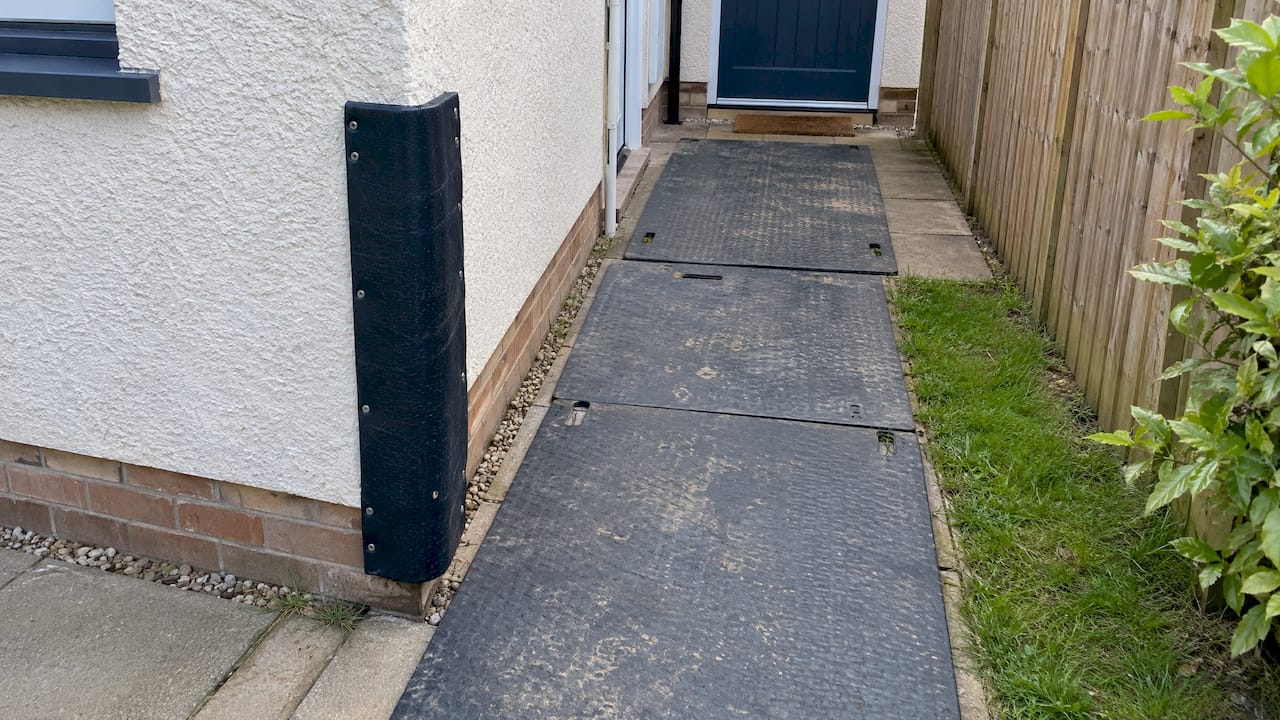
Ask how the crew protects floors, door frames, paving and lawns. Ground protection boards across grass, corner guards on walls and a clear plan for where the tub will rest during the move all prevent the common complaints: cracked slabs, scraped render and trampled borders. If you rent, protecting the property also protects your deposit, so tell your landlord or letting agent in advance.
What affects the cost of moving or removing a hot tub
No honest provider can quote accurately without details, because the same tub can be an easy job in one garden and a difficult one in the next. These are the factors that move a price up or down.
| Factor | Why it matters |
|---|---|
| Size and weight of the tub | Bigger tubs and swim spas need more people and sometimes lifting kit |
| Access | Narrow routes, steps or lifting over obstacles add time and equipment |
| Distance | Longer journeys take more time and fuel |
| Move or dispose | Disposal adds dismantling and waste handling; moving adds protection and careful loading |
| Disconnection and reconnection | Electrical work is separate from the move itself |
| Storage | Time in storage is a separate charge from the move |
| Timing | Short-notice and weekend slots can be harder to fit |
Ask for a written quote that says what is included: draining help, dismantling, disposal paperwork, insurance and whether the price covers both loading and unloading. Send photos of the tub, the route and the destination, and the quote will be more reliable.
Disposing of an unwanted hot tub responsibly
A hot tub is not something to leave on a verge or hand to the first person with a van. It counts as household waste, and under the law you have a duty to make sure it goes to someone authorised. GOV.UK states that if you use a private waste collection business, you should check it is on the register of waste carriers, selecting “upper tier”. If you take waste to a private site, check that it has an environmental permit or a registered waste exemption. Ask to see the carrier’s registration number and check it yourself.
Taking the tub apart
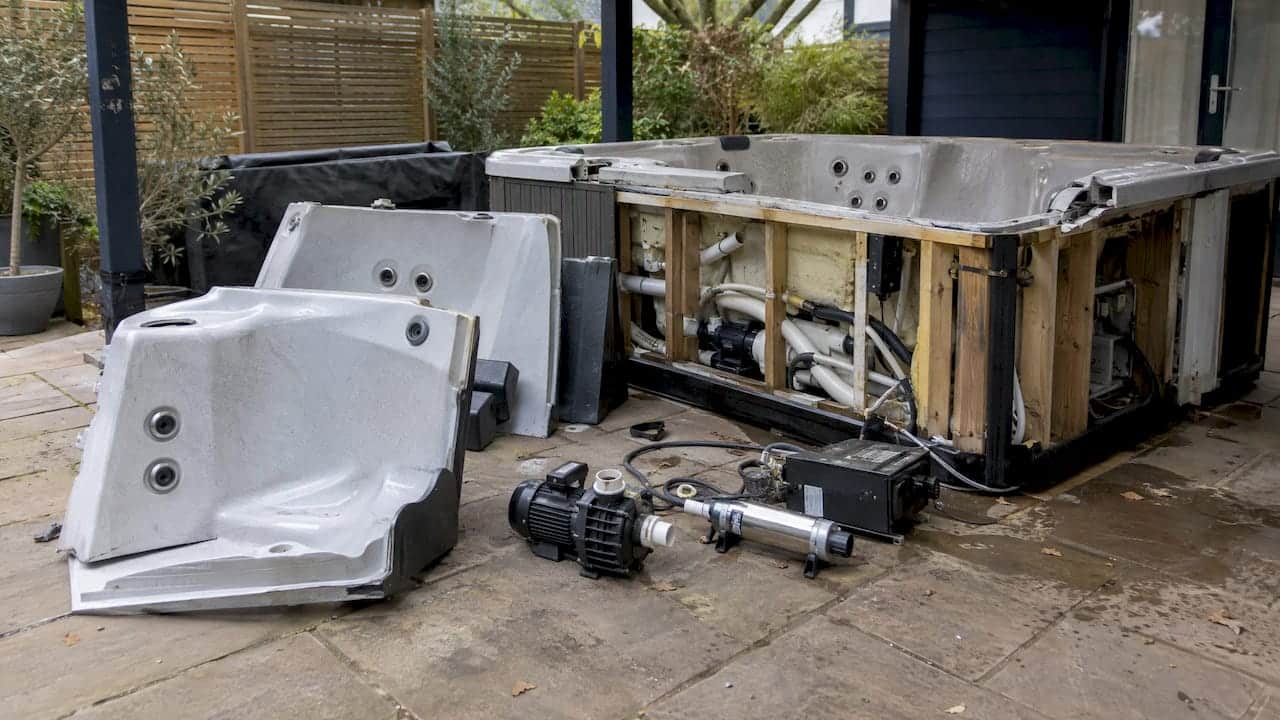
Rigid hot tubs are bulky, and many sites will not accept them whole. Rotherham Metropolitan Borough Council advises that rigid or plastic tubs may need to be cut into manageable sections depending on size and weight. It also says electrical components such as pumps, heaters and control units should be removed where possible and disposed of separately, and that a tub containing water treatment chemicals must be fully emptied and drained before disposal. In practice, that means the shell and the electrics follow different routes.
Check with your own council, because household waste centres have different rules on size limits, vehicle types and booking.
If the hot tub is part of a larger clear-out
Tubs are often left behind in a bigger job: a bereavement, an end of tenancy, a landlord clearing a property or a downsizing move. If the garden is only one part of the clear-out, it makes sense to deal with the whole property through one team. Our house clearance service covers bereavement clearances and end of tenancy clearances, with responsible disposal of unwanted items.
Electrics: the part that is not a removal job
A tub that is being moved will need to be disconnected at one end and reconnected at the other. That is electrician’s work, not a job for the removal crew, and it is better to book it before the move date so the tub is not sitting unpowered in a new garden for weeks.
Installer Online explains that electrical work for hot tub installation falls under Part P of the Building Regulations in England and Wales, so it must be notified to building control or carried out by a registered competent person under a scheme such as NICEIC, NAPIT or ELECSA. The same source says RCD protection with a maximum tripping current of 30mA is mandatory for circuits supplying hot tubs.
If you are renting and the tub belongs to you, ask the landlord whether the circuit stays or goes. If you are buying a property with a tub, ask for the electrical certificate.
Storing a hot tub during a move or renovation
Sometimes the tub has to leave the garden before it has anywhere to go. The patio is being relaid, the extension has not been built or the new house has no suitable base. In those cases, storage is often cheaper and calmer than rushing the reinstall.
What to think about:
- Dry and covered. Keep the tub out of rain and frost, and store it the right way up unless the manufacturer says otherwise.
- Clean and fully drained. Leave no standing water in the shell or pipework.
- Cover and accessories labelled. Keep the cover, steps and fittings together.
- Security and access. Know who can reach the unit and when.
- Length of stay. Agree whether the storage is for weeks or months, and what the notice period is.
Our storage solutions cover residential and commercial needs, with flexible arrangements for people going through a renovation, a downsize or a transition between homes. Tell us what you need to store and for how long, and we will advise on what suits.
Moving house with a hot tub
If the tub is moving with you, sequence matters.
- Decide early. Check whether the tub is included in the sale or whether you are taking it. Put that in writing with the buyer or landlord.
- Check the new site. The base needs to be level and strong enough, the route to it needs to be clear and there must be a suitable electrical supply.
- Book the electrician. Arrange disconnection and reconnection for the right days.
- Schedule the tub move around the house move. Some people move the tub the same day, others a few days earlier or later.
- Plan the water. You will need to refill at the new address, so check the outside tap and the hose reach.
For a whole-house move, a single crew that handles the furniture, the packing and the larger items makes the day easier to coordinate. Our home removals service includes packing, large item removals and piano removals. If you are in Chester or Wrexham, see our pages for home removals in Chester and home removals in Wrexham.
What to check before you book anyone
The market for moving and clearing bulky items is full of one-person operators, local firms and national platforms. Use this checklist with any provider.
- Insurance. Ask what is covered, including damage to the tub, your property and the crew.
- Waste carrier registration if disposal is involved, and a waste transfer note afterwards.
- Experience with heavy and awkward items, not just boxes and furniture.
- A site visit or photo survey before a price is fixed.
- A written quote that says what is included and what is not.
- Clear communication about arrival windows, who is attending and who to call on the day.
- Local knowledge. A crew that knows the area deals better with narrow roads, parking and local tip rules.
Businesses with a tub at a holiday let, a spa or a clubhouse have the same needs plus one more: minimal disruption. Plan the work for a quiet period and agree access with the site manager.
Our view: why careful handling matters most
Over 20 years of removals in Chester, Wrexham and the surrounding areas, we have learned that heavy and awkward items are rarely about strength. They are about planning. Where the item sits, how it gets out, what could be scratched on the way and where it will be put down all matter before anyone lifts a thing.
That is how we approach every job. Our team treats each item with care during loading, transporting and unloading, and we are fully insured. We prefer to understand the whole picture first: the property, the route, the timing and whether anything needs to go into storage or be cleared responsibly.
If a large item is part of a wider move, a renovation or a clear-out, one team handling all of it removes a lot of stress. Our aim is a smooth, reliable job from the first call to the last item set down.
the author
Talk to us about your move or clear-out
If a hot tub is part of a house move, a renovation, a downsize or a property clearance, tell us about it when you ask for a quote. We handle home and commercial removals, large item removals, packing, house clearances and flexible storage for homeowners, tenants, landlords and businesses across Chester, Wrexham, Cheshire and North Wales. Send us details of the item, the access and your timing, and we will give you a tailored quote through our home removals team.

For a wider move, you can also start at Taylormade Removals and tell us what you need.
FAQ
Is moving a hot tub different from removing one?
Yes. Moving means the tub is protected and kept intact for reinstallation, so it needs careful handling and an electrician at each end. Removal for disposal means the tub is drained, taken apart and sent to authorised waste facilities. Say which one you need when you ask for a quote.
Can I drain my hot tub into the street drain?
Not if the water is chemically treated and the volume is large. Compare the guidance from your water company, which generally points to the foul sewer in sensible quantities rather than surface water drains or watercourses. If you are unsure, ask the company that is collecting the tub or your local water provider.
Who should disconnect and reconnect the electrics?
A registered electrician. In England and Wales, hot tub electrical work falls under Part P of the Building Regulations, so it must be notified or carried out by a registered competent person. Book the electrician before the move so the tub can be reinstalled promptly.
Can a hot tub be stored while my garden is being redone?
Yes, as long as it is drained, cleaned, dried and kept somewhere dry and secure. Keep the cover and fittings with it. Our storage solutions are flexible for renovations and moves, so ask us about what suits your timing.
Sources
- Dispose of household waste, GOV.UK
- Hot Tubs (Inflatable & Rigid/Plastic), Rotherham Metropolitan Borough Council
- CPA Technical Information Note, Construction Plant-hire Association
- Electrical wiring considerations for hot tubs, Installer Online


Leave a Reply
Want to join the discussion?Feel free to contribute!